
JSONIFY FOR YOUR BUSINESS
JSONIFY FOR YOUR BUSINESS
Food & Beverage
Track where your products appear, how they’re priced, and how competitors are winning — across millions of venues and menus worldwide.
“The opportunity is validated. You did a very good job—your flexibility, the extractions, the speed… it’s quite impressive. This could really become a new capability for Bacardi.”

Jesus Checa
Strategy and Innovation Director, Bacardi
“The opportunity is validated. You did a very good job—your flexibility, the extractions, the speed… it’s quite impressive. This could really become a new capability for Bacardi.”
Jesus Checa
Strategy and Innovation Director, Bacardi
“The opportunity is validated. You did a very good job—your flexibility, the extractions, the speed… it’s quite impressive. This could really become a new capability for Bacardi.”
Jesus Checa
Strategy and Innovation Director, Bacardi
98.7%
accuracy at large-scale menu data extraction
ON-TRADE
ON-TRADE
ON-TRADE
Bars, Restaurants, Hospitality menus worldwide
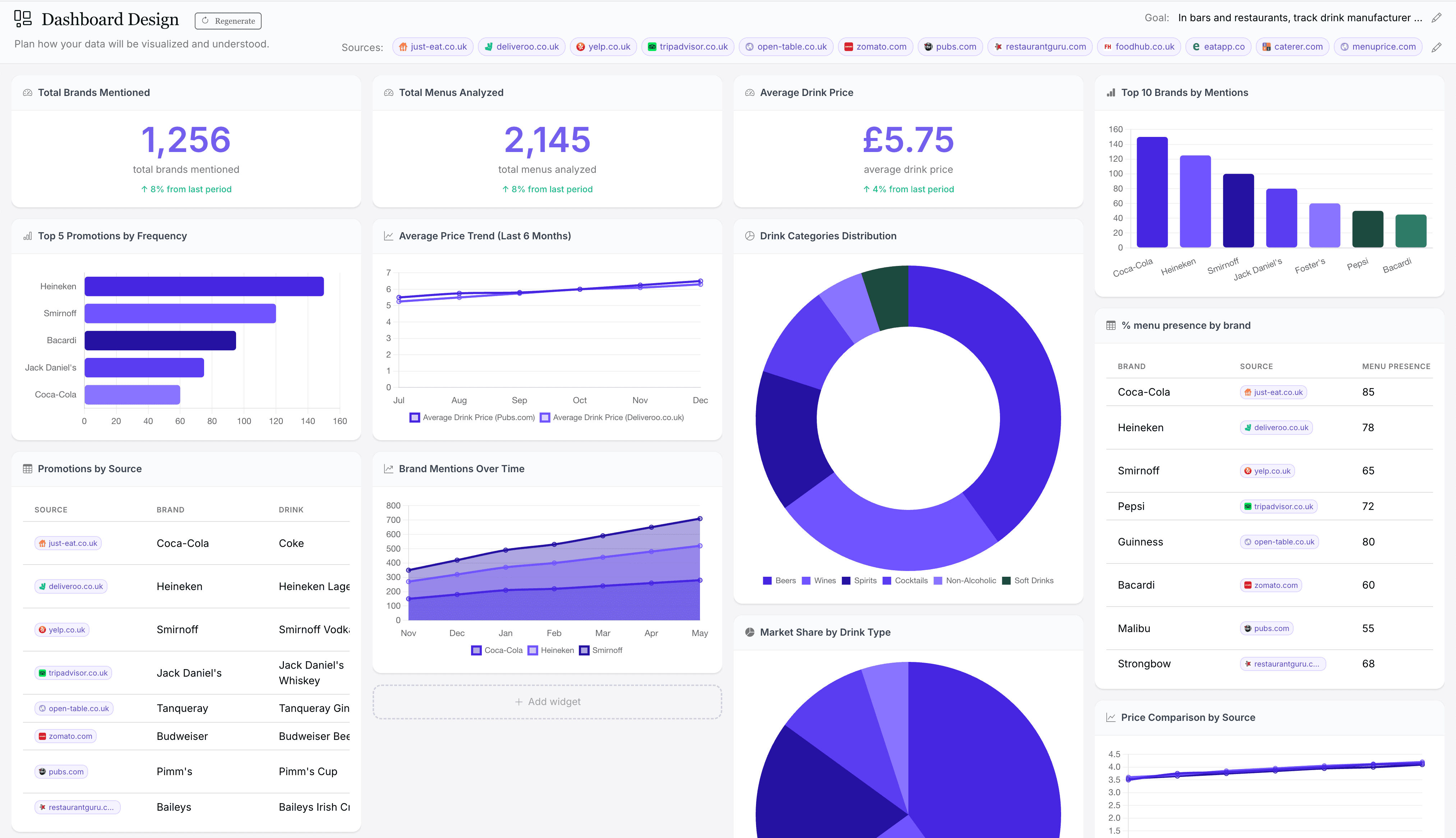
Understand where your products appear, how they’re priced, and how competitors are winning — across bars, restaurants, and hospitality venues.
Jsonify automatically discovers venues, navigates menus, and extracts structured data from thousands of on-trade locations worldwide. We track product presence, cocktail usage, pricing, and competitor placement at scale — giving trade marketing and commercial teams a clear, up-to-date view of real on-trade performance without manual audits or field surveys.
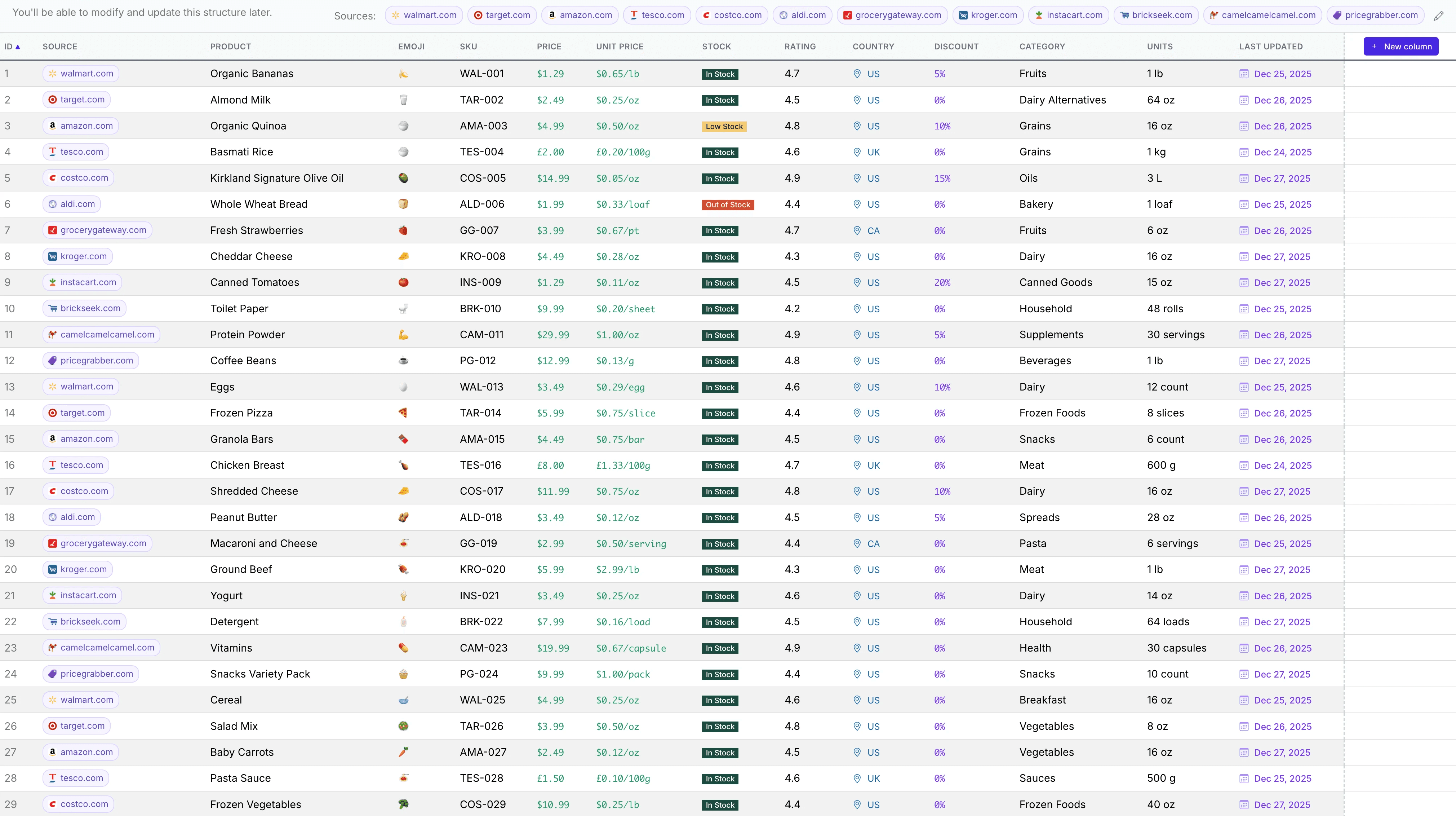
Track product availability, pricing, promotions, and competitor activity across online supermarkets, retailers and other e-commerce platforms.
Jsonify continuously monitors off-trade channels — from large retailers to niche e-commerce sites — extracting structured product data at scale. We normalize SKUs, track pricing and promotions, and surface availability and assortment differences across regions, giving commercial, e-commerce, and data teams a reliable view of off-trade performance without manual scraping or brittle integrations.
OFF-TRADE
OFF-TRADE
OFF-TRADE
Worldwide supermarket, retailer, and ecommerce listing scans
SINCE 2023, WE'VE EXTRACTED BILLIONS OF DATA POINTS FOR TEAMS AT









SINCE 2023, WE'VE EXTRACTED BILLIONS OF DATA POINTS FOR TEAMS AT
SINCE 2023, WE'VE EXTRACTED BILLIONS OF DATA POINTS FOR TEAMS AT
F&B FAQ
F&B FAQ
F&B FAQ
Frequently asked questions
Frequently asked questions
Everything you need to know about getting started with Jsonify.
Everything you need to know about getting started with Jsonify.
Is Jsonify just a web scraping tool?
No. Jsonify is a market intelligence platform that collects publicly available web data and then processes, normalizes, and analyzes it to produce structured insights. While Jsonify uses automated agents to access public webpages and documents, the core value of the platform lies in what happens after collection: extracting structured product and price data, matching it to real SKUs, tracking changes over time, and delivering analytics through dashboards, exports, and APIs. Jsonify does not simply retrieve raw webpages. It transforms publicly accessible information into actionable intelligence for business use, under customer-defined instructions and compliance controls.
What types of venues does Jsonify cover?
Jsonify scans menus and listings from bars, restaurants, cafés, hotels, and hospitality groups. This includes independent venues as well as multi-site chains, across cities, regions, and countries.
What menu data can Jsonify extract?
Jsonify extracts structured product and price data from menus, including brand names, product variants, prices, and menu placement signals. This allows teams to analyze presence, pricing, and competitive positioning across venues and markets.
How does Jsonify handle messy or inconsistent menu text?
Menus are rarely standardized. Jsonify normalizes inconsistent naming and matches menu listings to real SKUs using fuzzy matching and product intelligence, so insights are reported at the brand and product level — not as raw text fragments.
Can Jsonify track competitors as well as our own brands?
Yes. Jsonify can track your brands, competitor brands, or both. This makes it possible to measure share-of-menu, compare pricing, and identify venues or regions where competitors are present but your products are not.
How is this different from manual audits or field reports?
Manual audits are slow, expensive, and incomplete. Jsonify provides continuous, repeatable visibility across thousands of venues without on-site visits, allowing teams to monitor execution and market changes at scale.
What teams typically use Jsonify in F&B organizations?
Jsonify is commonly used by trade marketing, sales excellence, category management, and commercial analytics teams. Insights are shared across regions to support account planning, execution tracking, and competitive analysis.
Is Jsonify just a web scraping tool?
No. Jsonify is a market intelligence platform that collects publicly available web data and then processes, normalizes, and analyzes it to produce structured insights. While Jsonify uses automated agents to access public webpages and documents, the core value of the platform lies in what happens after collection: extracting structured product and price data, matching it to real SKUs, tracking changes over time, and delivering analytics through dashboards, exports, and APIs. Jsonify does not simply retrieve raw webpages. It transforms publicly accessible information into actionable intelligence for business use, under customer-defined instructions and compliance controls.
What types of venues does Jsonify cover?
Jsonify scans menus and listings from bars, restaurants, cafés, hotels, and hospitality groups. This includes independent venues as well as multi-site chains, across cities, regions, and countries.
What menu data can Jsonify extract?
Jsonify extracts structured product and price data from menus, including brand names, product variants, prices, and menu placement signals. This allows teams to analyze presence, pricing, and competitive positioning across venues and markets.
How does Jsonify handle messy or inconsistent menu text?
Menus are rarely standardized. Jsonify normalizes inconsistent naming and matches menu listings to real SKUs using fuzzy matching and product intelligence, so insights are reported at the brand and product level — not as raw text fragments.
Can Jsonify track competitors as well as our own brands?
Yes. Jsonify can track your brands, competitor brands, or both. This makes it possible to measure share-of-menu, compare pricing, and identify venues or regions where competitors are present but your products are not.
How is this different from manual audits or field reports?
Manual audits are slow, expensive, and incomplete. Jsonify provides continuous, repeatable visibility across thousands of venues without on-site visits, allowing teams to monitor execution and market changes at scale.
What teams typically use Jsonify in F&B organizations?
Jsonify is commonly used by trade marketing, sales excellence, category management, and commercial analytics teams. Insights are shared across regions to support account planning, execution tracking, and competitive analysis.
Is Jsonify just a web scraping tool?
No. Jsonify is a market intelligence platform that collects publicly available web data and then processes, normalizes, and analyzes it to produce structured insights. While Jsonify uses automated agents to access public webpages and documents, the core value of the platform lies in what happens after collection: extracting structured product and price data, matching it to real SKUs, tracking changes over time, and delivering analytics through dashboards, exports, and APIs. Jsonify does not simply retrieve raw webpages. It transforms publicly accessible information into actionable intelligence for business use, under customer-defined instructions and compliance controls.
What types of venues does Jsonify cover?
Jsonify scans menus and listings from bars, restaurants, cafés, hotels, and hospitality groups. This includes independent venues as well as multi-site chains, across cities, regions, and countries.
What menu data can Jsonify extract?
Jsonify extracts structured product and price data from menus, including brand names, product variants, prices, and menu placement signals. This allows teams to analyze presence, pricing, and competitive positioning across venues and markets.
How does Jsonify handle messy or inconsistent menu text?
Menus are rarely standardized. Jsonify normalizes inconsistent naming and matches menu listings to real SKUs using fuzzy matching and product intelligence, so insights are reported at the brand and product level — not as raw text fragments.
Can Jsonify track competitors as well as our own brands?
Yes. Jsonify can track your brands, competitor brands, or both. This makes it possible to measure share-of-menu, compare pricing, and identify venues or regions where competitors are present but your products are not.
How is this different from manual audits or field reports?
Manual audits are slow, expensive, and incomplete. Jsonify provides continuous, repeatable visibility across thousands of venues without on-site visits, allowing teams to monitor execution and market changes at scale.
What teams typically use Jsonify in F&B organizations?
Jsonify is commonly used by trade marketing, sales excellence, category management, and commercial analytics teams. Insights are shared across regions to support account planning, execution tracking, and competitive analysis.

Let’s turn the web into your structured advantage.
See how Jsonify turns public web and app data into structured, decision-ready insights.
Let’s turn the web into your structured advantage.
See how Jsonify turns public web and app data into structured, decision-ready insights.
Let’s turn the web into your structured advantage.
See how Jsonify turns public web and app data into structured, decision-ready insights.